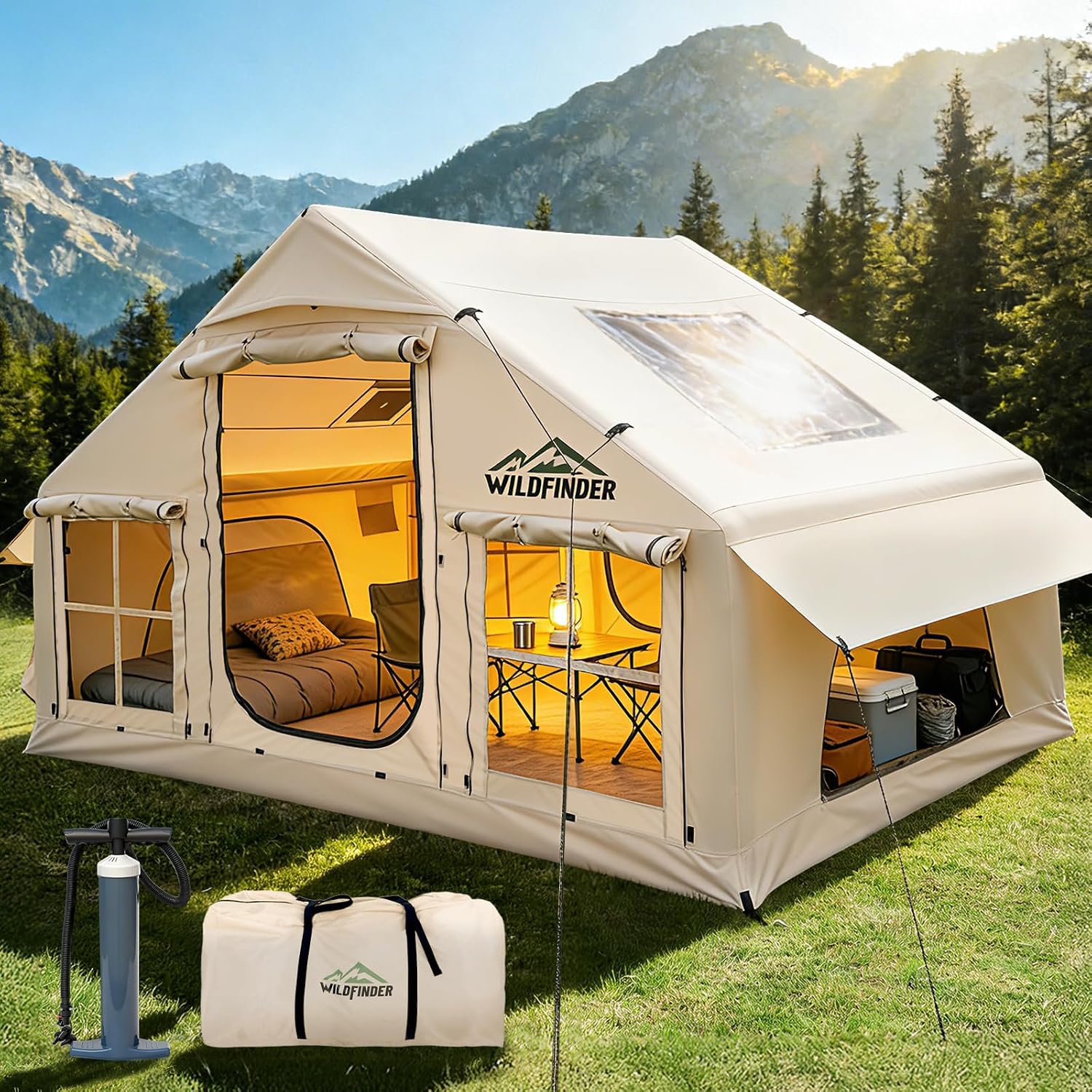
Best Inflatable Tents for Camping and Glamping
We evaluated inflatable tents across setup speed, air beam durability, waterproofing ratings, interior livability, and all-season performance. The focus is on blow-up tents designed for car camping, family glamping, and four-season use, covering options from compact two-person designs to large cabin-style shelters that sleep up to ten.
The most overlooked factor when buying an inflatable tent is air beam quality. Not all TPU or PVC tubes are built to the same wall thickness or pressure tolerance. Thin-walled beams deform under load and lose pressure faster in cold temperatures, which means the tent starts to sag by morning. Reinforced multi-layer TPU beams hold their shape through the night and recover more reliably after deflation. The published fabric denier rating tells you about the canopy; it tells you nothing about the air beam. Read reviews specifically for reports of sagging or deflating overnight.
Setup time claims are almost always measured under ideal conditions with two people. A stated five-minute setup typically assumes the pump is plugged in, the tent is already positioned flat, and the weather is calm. In real-world conditions with wind, uneven ground, or a single person setting up, expect the first setup to take two to three times longer than the advertised figure. The actual advantage of inflatable tents over pole tents is consistency after the first setup, not raw speed. Once you know the inflation sequence and valve positions for your specific tent, repeat pitches become genuinely fast.

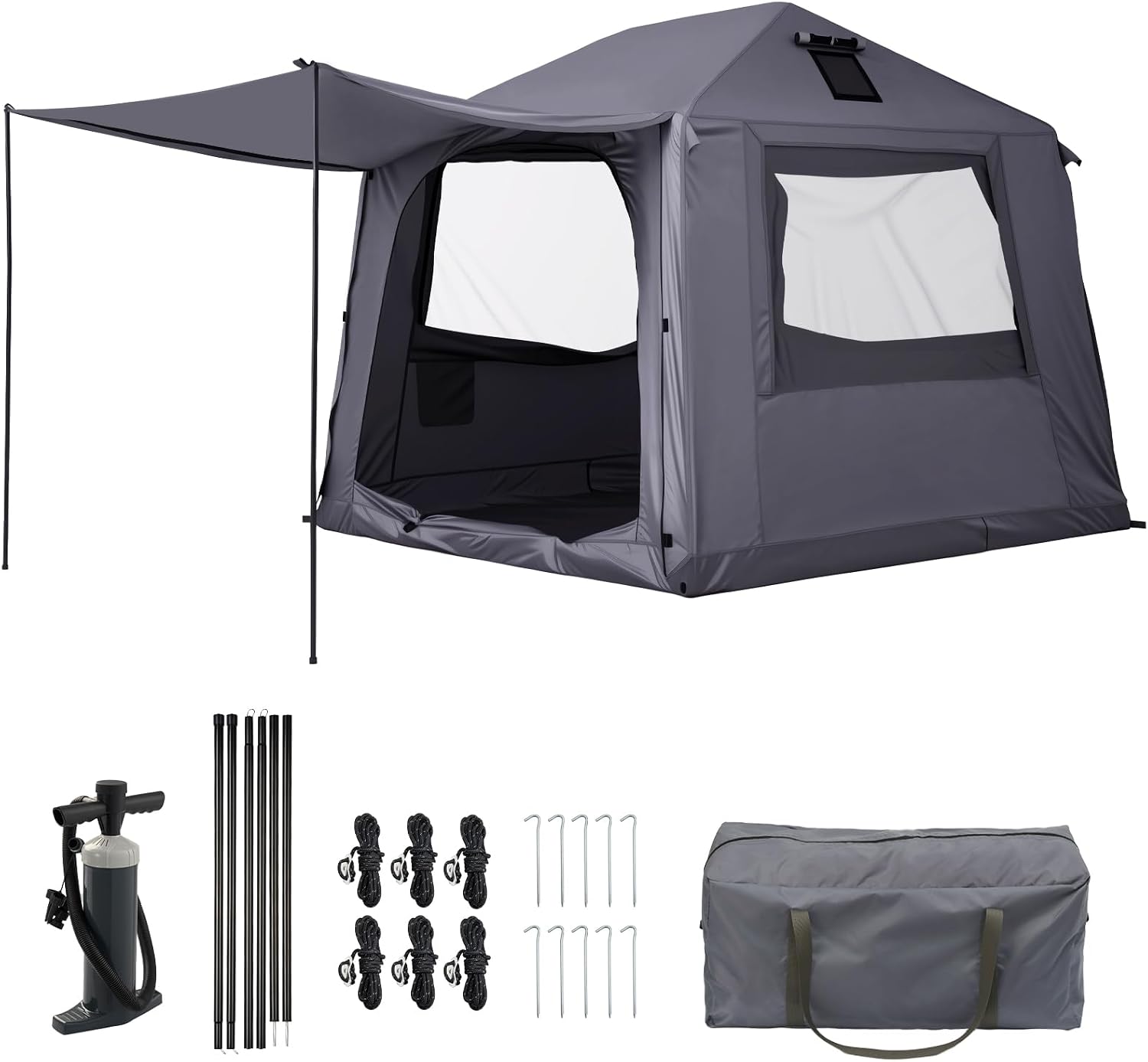 Best Value
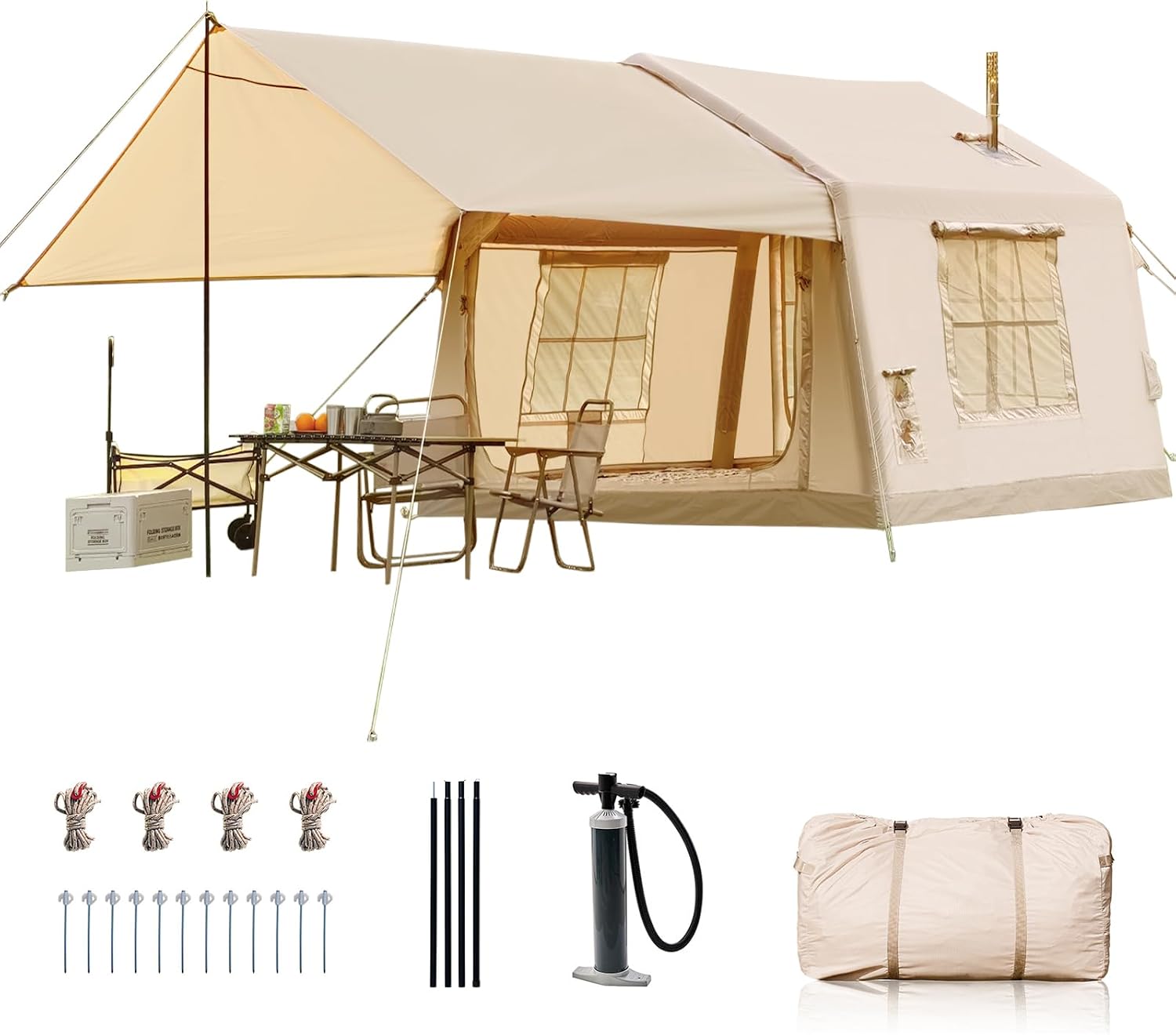 Best for Families
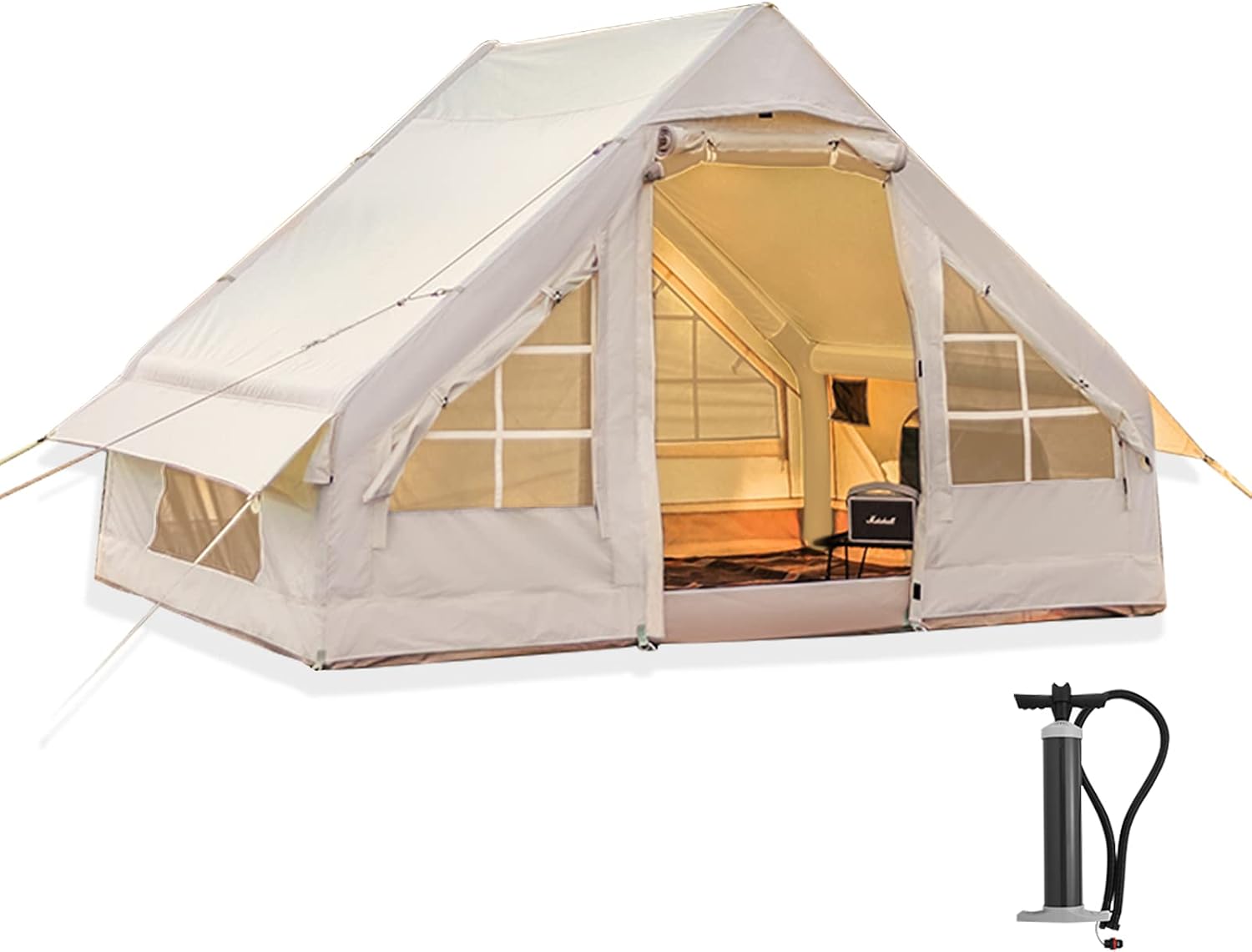 Best for Car Camping
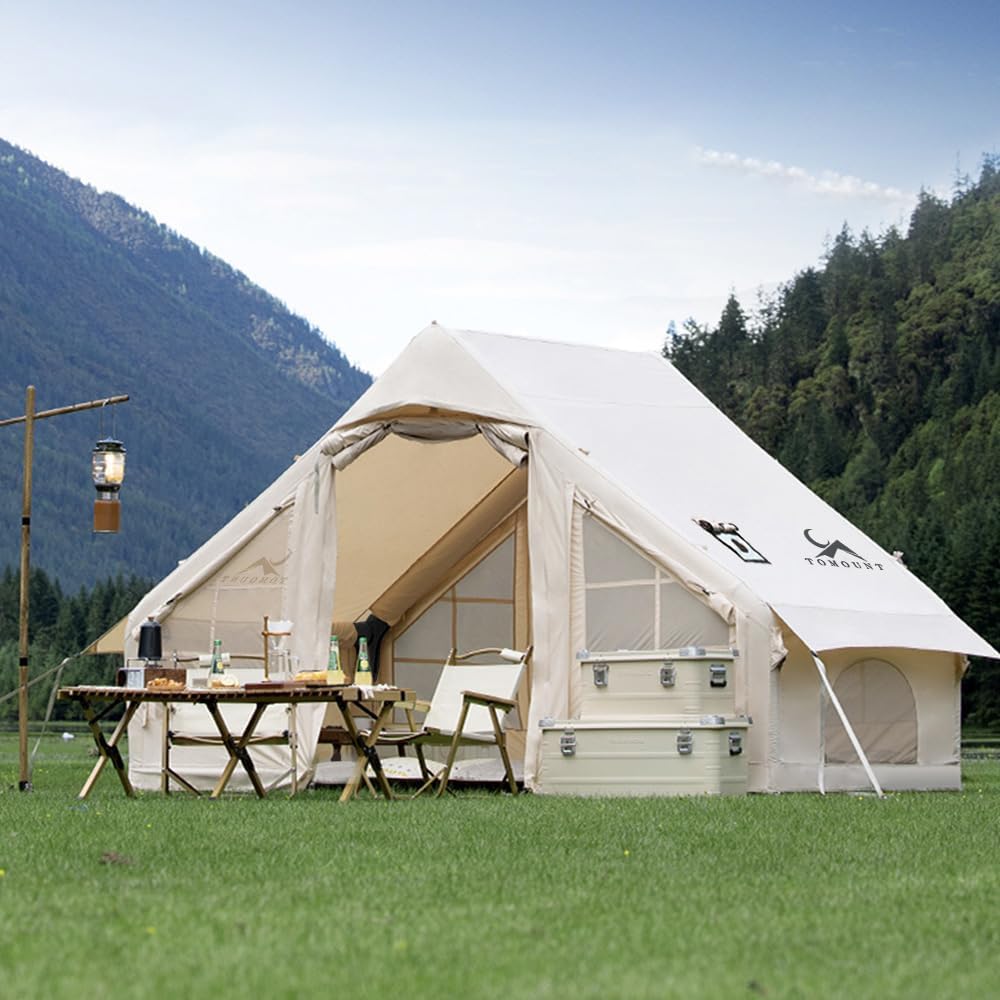 Best Lightweight