CCCEI Heavy Duty Power Strip Surge Protector, 20 AMP
20 amps is for shops and garages -- for home and office use, a standard strip handles the load better.
- 20-amp design for industrial and shop use -- unnecessary for home electronics
- 4.8 stars from 979 reviews
- No USB ports -- industrial design prioritizes raw power over device charging
Best For / Not For
Best for
- Garages and workshops with 20-amp circuits and power tool loads
- Commercial spaces with high-draw equipment on dedicated 20-amp breakers
Not for
- Home and office use -- standard 15-amp circuits are universal in residential settings
- Anyone who needs USB charging -- this strip has no USB ports
Key Details
20-Amp vs 15-Amp -- Do You Actually Have a 20-Amp Circuit?
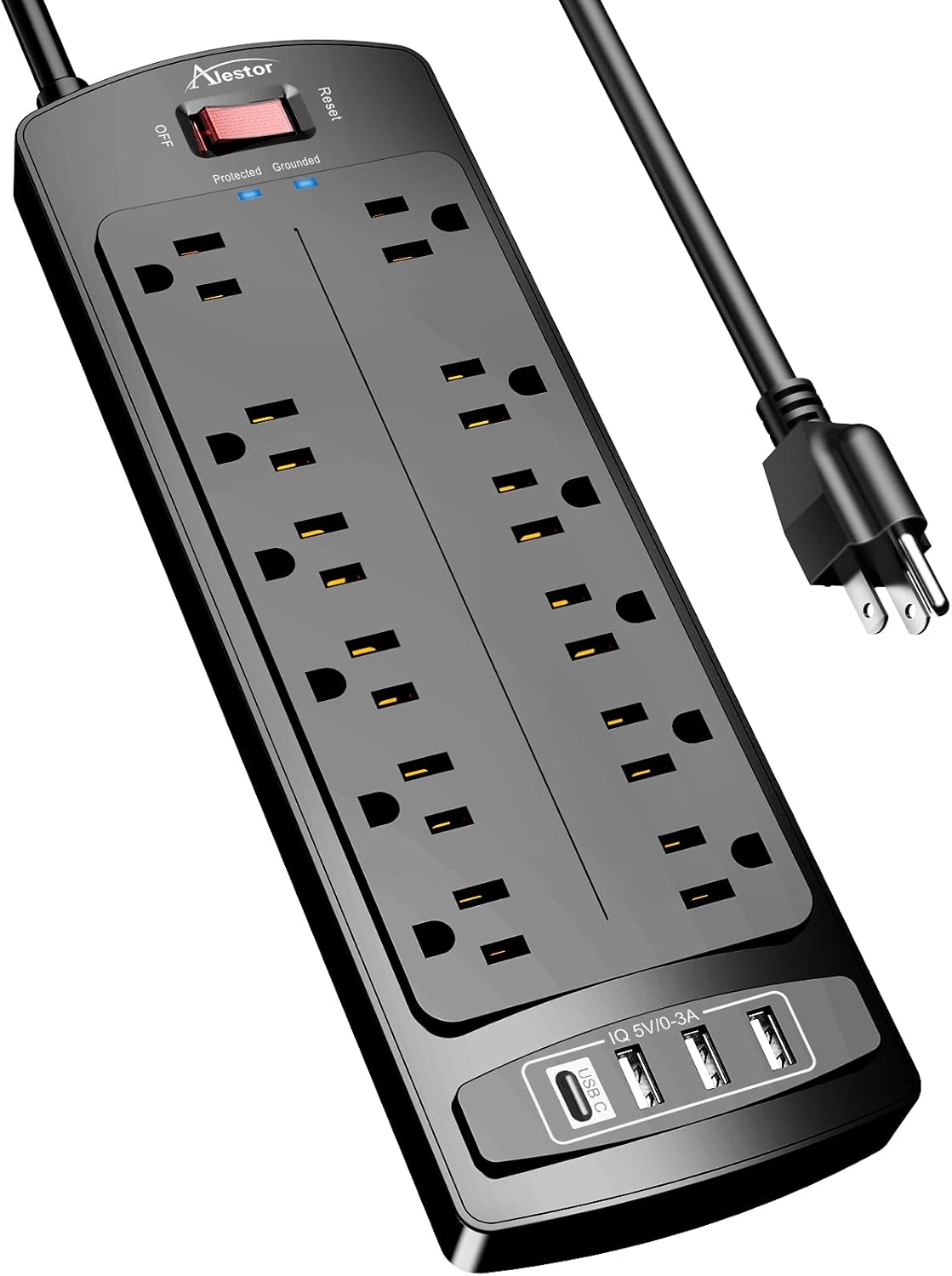
Standard residential outlets in North America are 15-amp circuits on 14-gauge wiring -- the white or ivory outlets you find in every bedroom, living room, and office. 20-amp circuits use 12-gauge wiring and have a distinctive T-shaped neutral slot on the outlet. A 20-amp power strip plugged into a 15-amp outlet cannot draw more than 15 amps regardless of the strip's rating -- the circuit breaker limits it. You only benefit from a 20-amp strip if you actually have 20-amp outlets, which in residential settings appear mainly in kitchens, bathrooms, garages, and dedicated appliance circuits. If your home's outlets are standard 15-amp, the CCCEI provides no practical advantage over the ALESTOR.
Pros and Cons
Pros
- 20-amp capacity for workshop and industrial loads
- Heavy-duty 12-gauge cord for high-draw applications
- 4.8 stars from 979 reviews
Cons
- No USB ports
- Overkill for home and office use on 15-amp circuits
- Most homes do not have 20-amp outlets to take advantage of the capacity
- Industrial form factor doesn't suit home aesthetics
Bottom Line
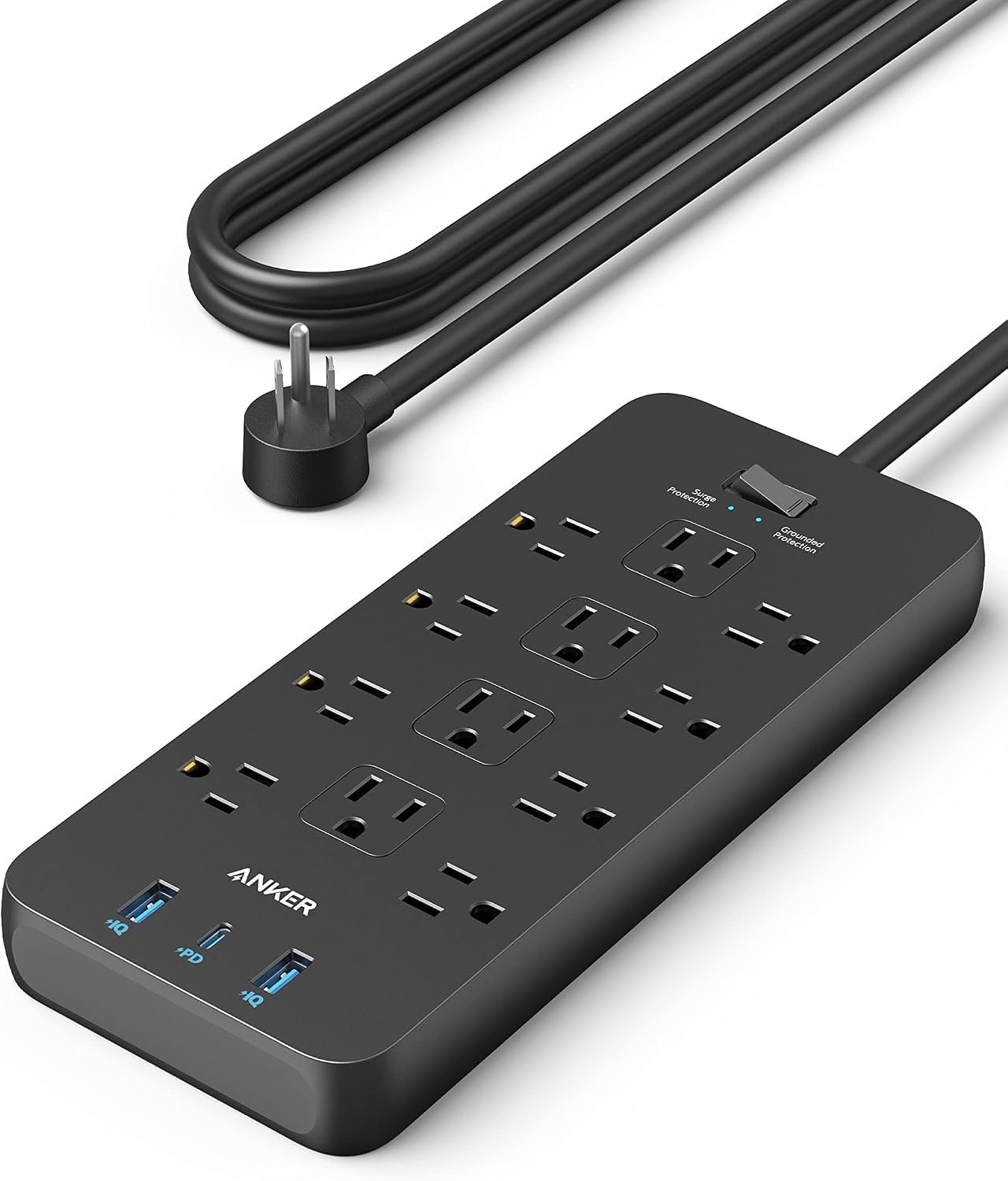
Skip the CCCEI 20-AMP for home and office use. Buy the ALESTOR for most needs, or the Anker for USB-C integration. The CCCEI is the right product specifically for workshop and industrial settings with 20-amp circuits.