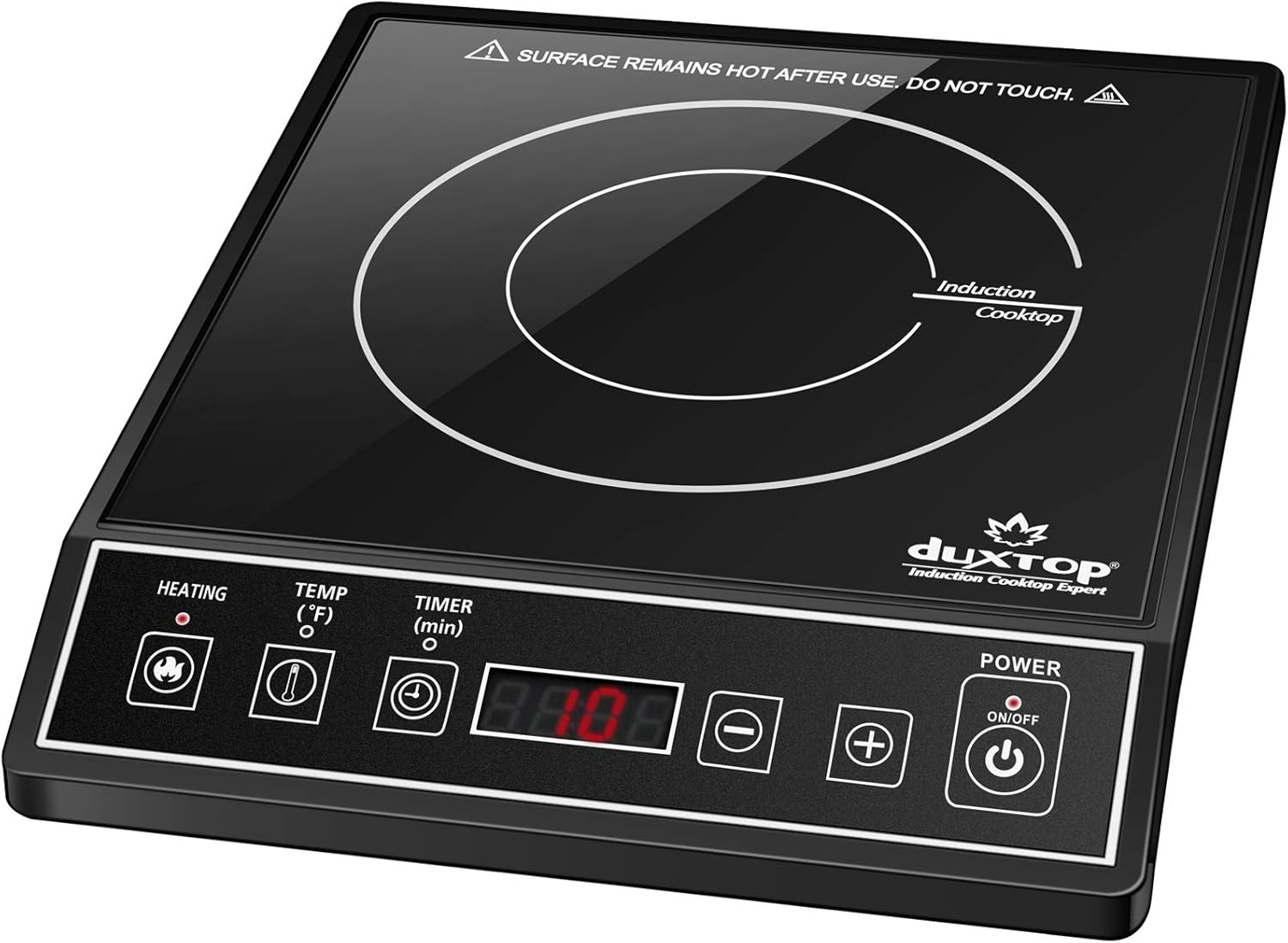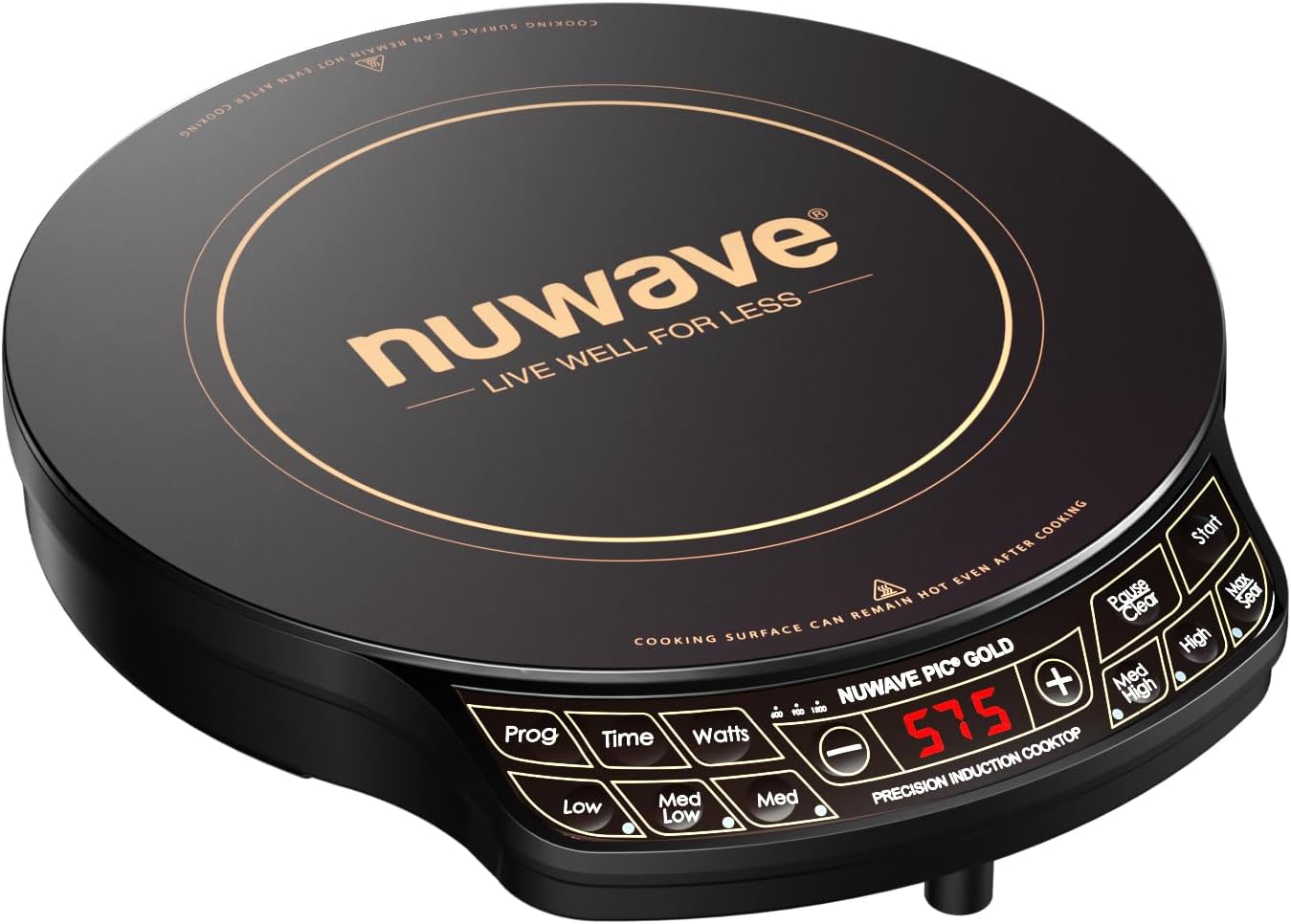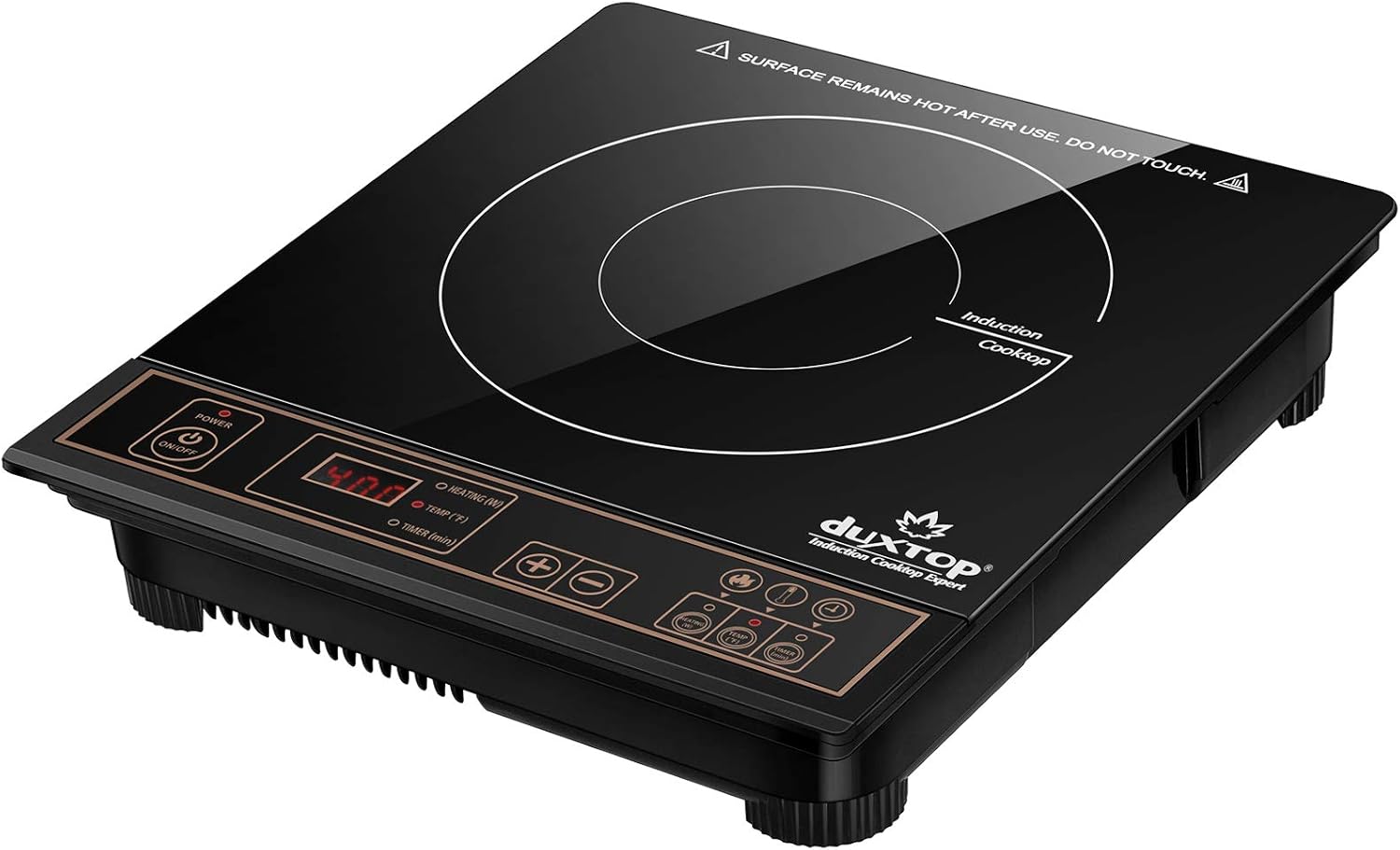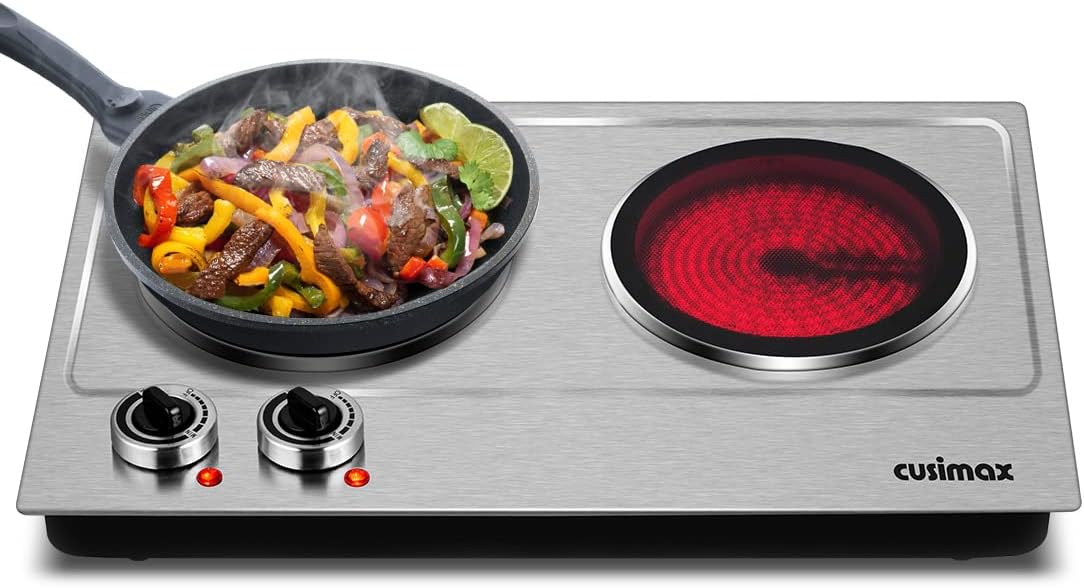
Duxtop 9600LS Induction Cooktop
More settings, better control -- the Duxtop upgrade for serious home cooks.
- 20 temperature settings -- 5 more steps than the base 9100MC
- Sensor touch panel for cleaner operation than dial controls
- 1800W full power with 10 power levels and 10 temperature levels
- Stainless steel frame adds durability over budget plastic-body competitors
Best For / Not For
Best for
- Home cooks who want more granular heat control than the 9100MC provides
- Buyers who prefer touch panel operation over dial controls
- Anyone looking to step up within the Duxtop lineup
Not for
- Budget buyers -- the 9100MC covers most needs at a lower price
- Non-magnetic cookware users
- Anyone who doesn't need the extra temperature steps
Key Details
Touch Panel vs. Dial
The 9600LS uses a sensor touch panel where the 9100MC uses a traditional dial. Touch panels are easier to wipe clean and don't have moving parts to wear out, but they require dry fingers to operate reliably. For most home kitchen environments the touch panel is the better long-term choice.
20 Settings in Practice
The extra 5 settings over the 9100MC are most useful in the low-heat range. More steps at low power means finer simmer control for delicate sauces and warming without scorching. High-heat performance between the two is essentially the same at 1800W.
Pros and Cons
Pros
- 20 settings gives the finest heat control in the standard Duxtop range
- Sensor touch panel is more hygienic and easier to clean than dial knobs
- Stainless steel frame is more durable than plastic competitors
- Same 1800W output as the 9100MC for fast heat-up
Cons
- Costs more than the 9100MC for incremental improvements
- Touch panels can be less responsive with wet fingers
- Still a single burner
Bottom Line
Buy the Duxtop 9600LS if the 9100MC appeals to you but you want cleaner touch control and finer heat steps. The stainless frame also holds up better in a busy kitchen.
Check current price on Amazon