
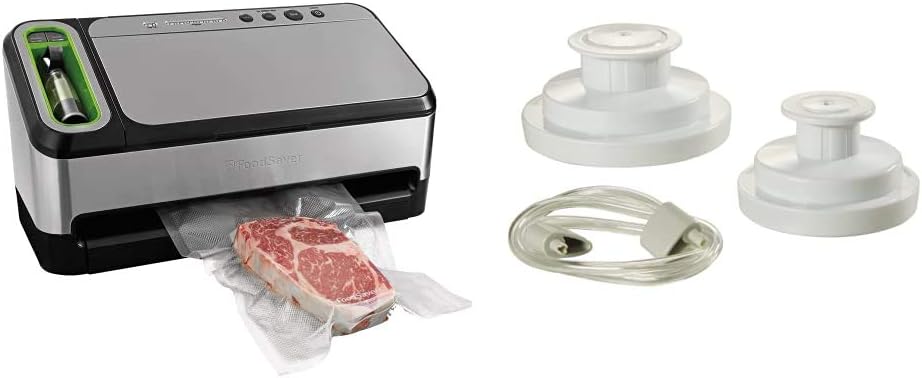
 Best Premium Pick
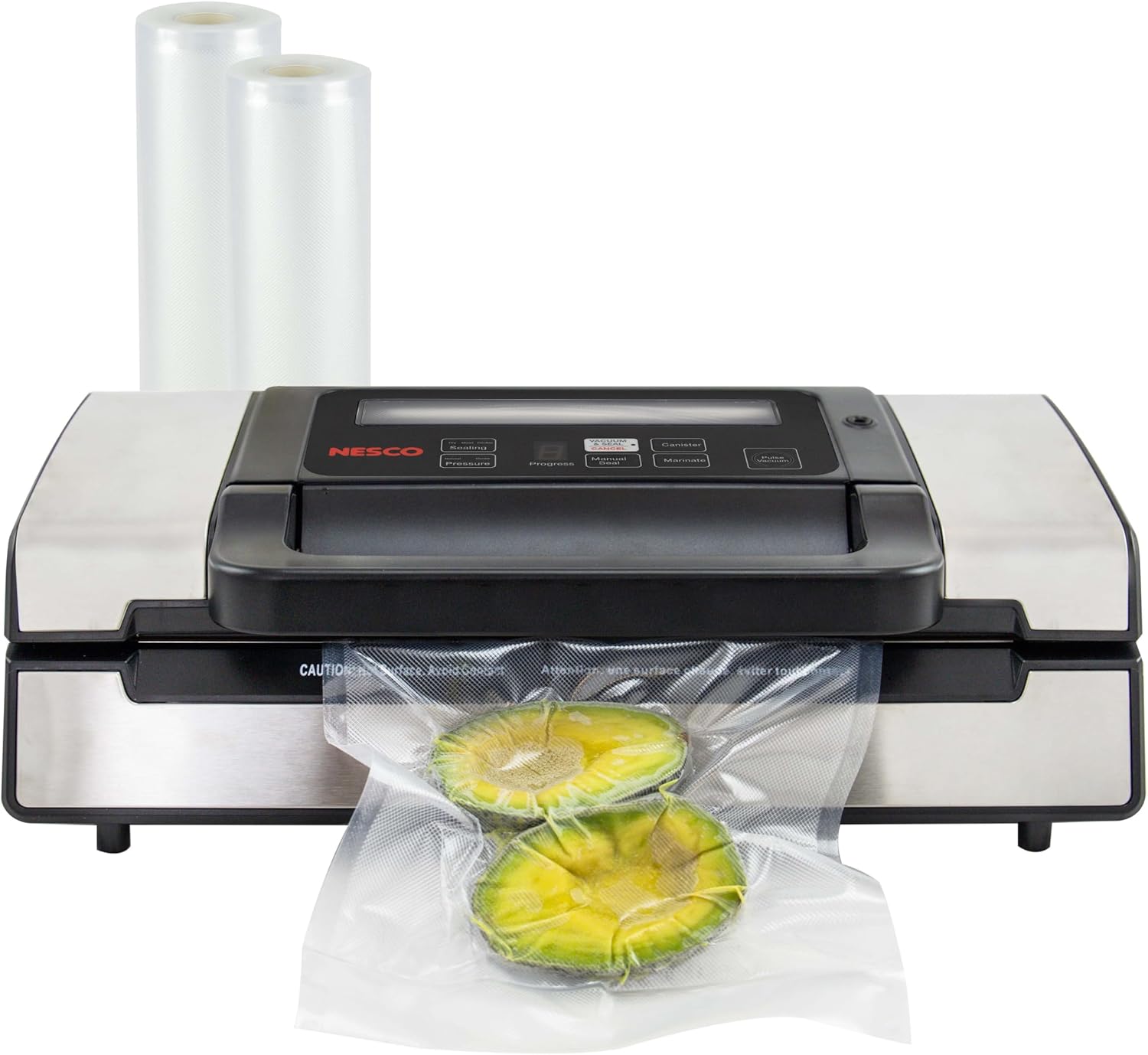 Best Mid-Range
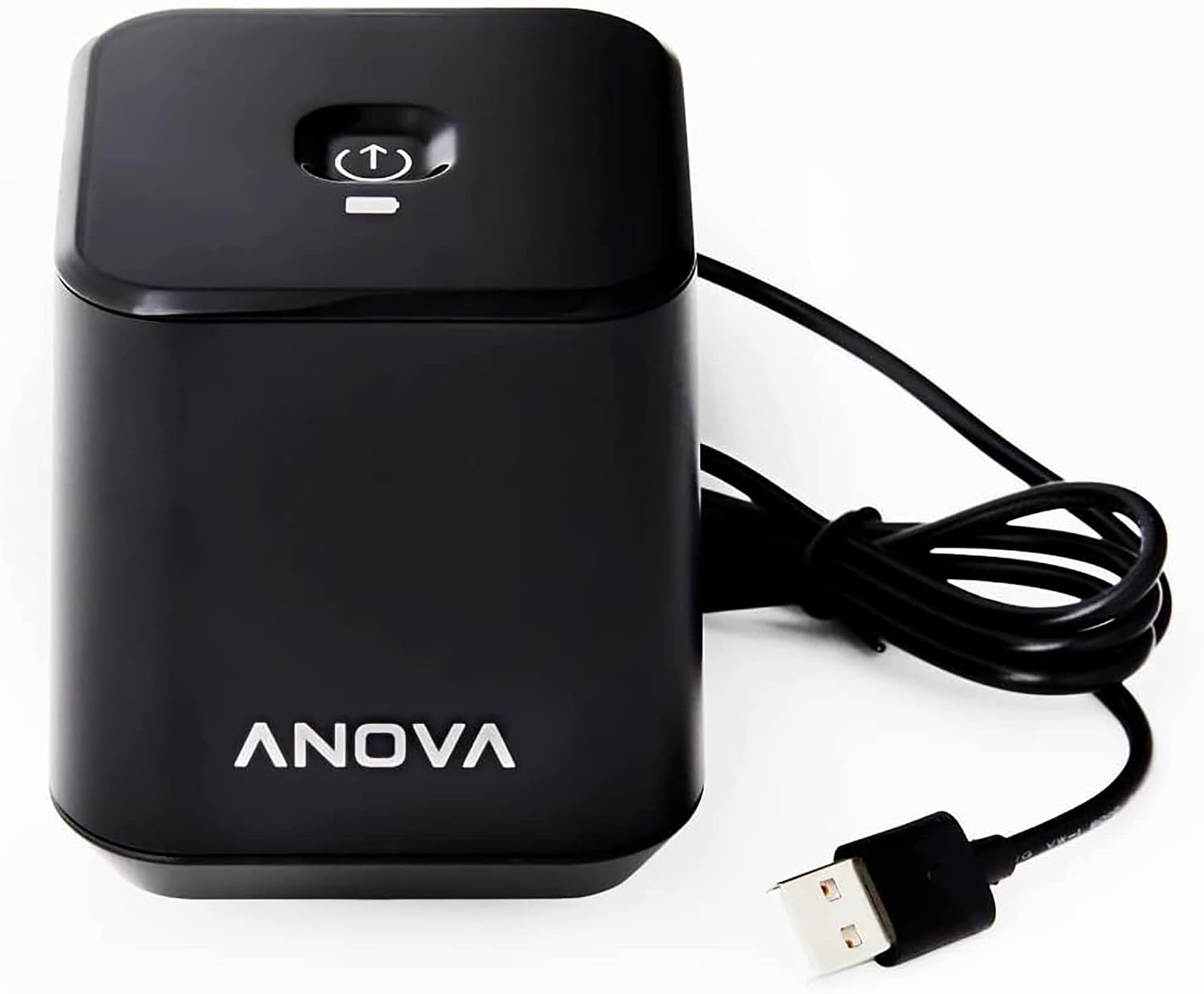 Best Compact
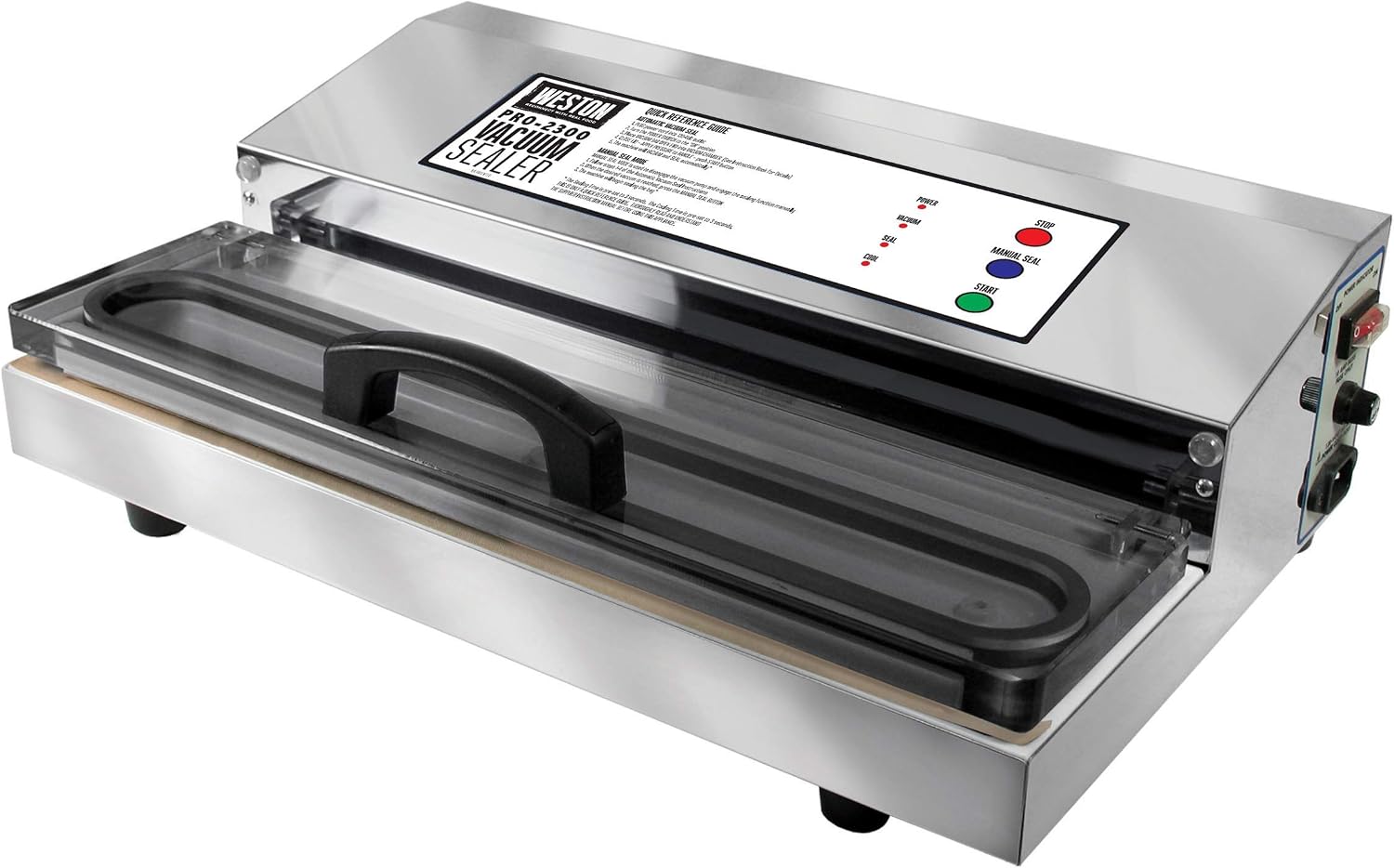 Best for Heavy Use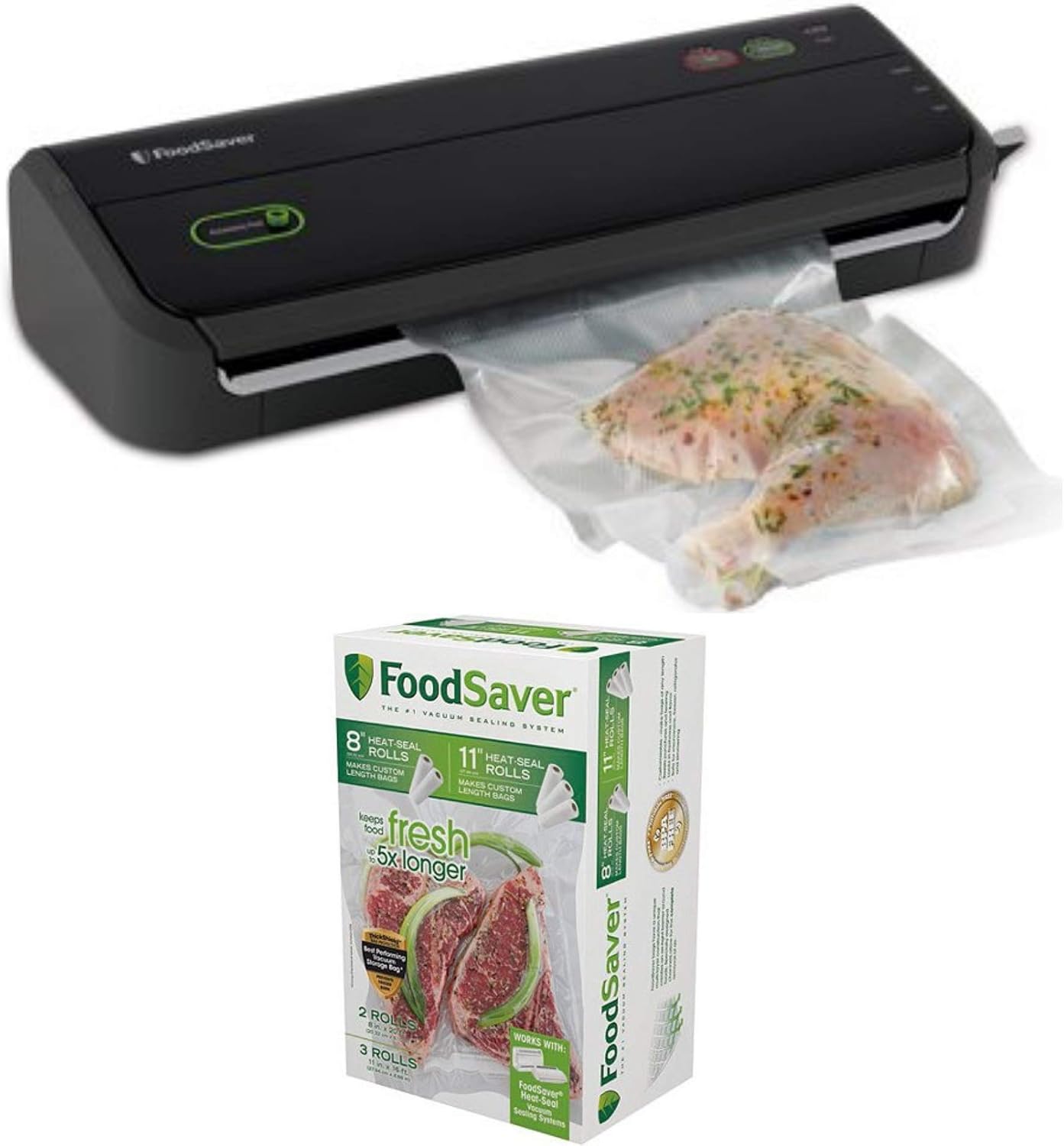
FoodSaver FM2000 Vacuum Sealer System with Starter Bag/Roll Set and 8" & 11" Vacuum Heat-Seal Rolls
The FoodSaver FM2000 is the go-to entry point for home cooks who want reliable, hands-free vacuum sealing without a steep learning curve. It handles dry and lightly moist foods well and works with both 8-inch and 11-inch rolls. At its price point, few machines offer this level of consistency right out of the box.
TL;DR
120 watts with automatic vacuum-to-seal operation
Pros
- Fully automatic: just insert the bag and it vacuums and seals on its own
- Works with both 8-inch and 11-inch rolls, giving bag size flexibility
- Compact footprint and lightweight at 5.3 lbs for easy storage
Cons
- Drip tray is not dishwasher safe on all variants, making cleanup of moist foods more manual
- Suction strength is adequate but not powerful enough for very wet or fatty proteins