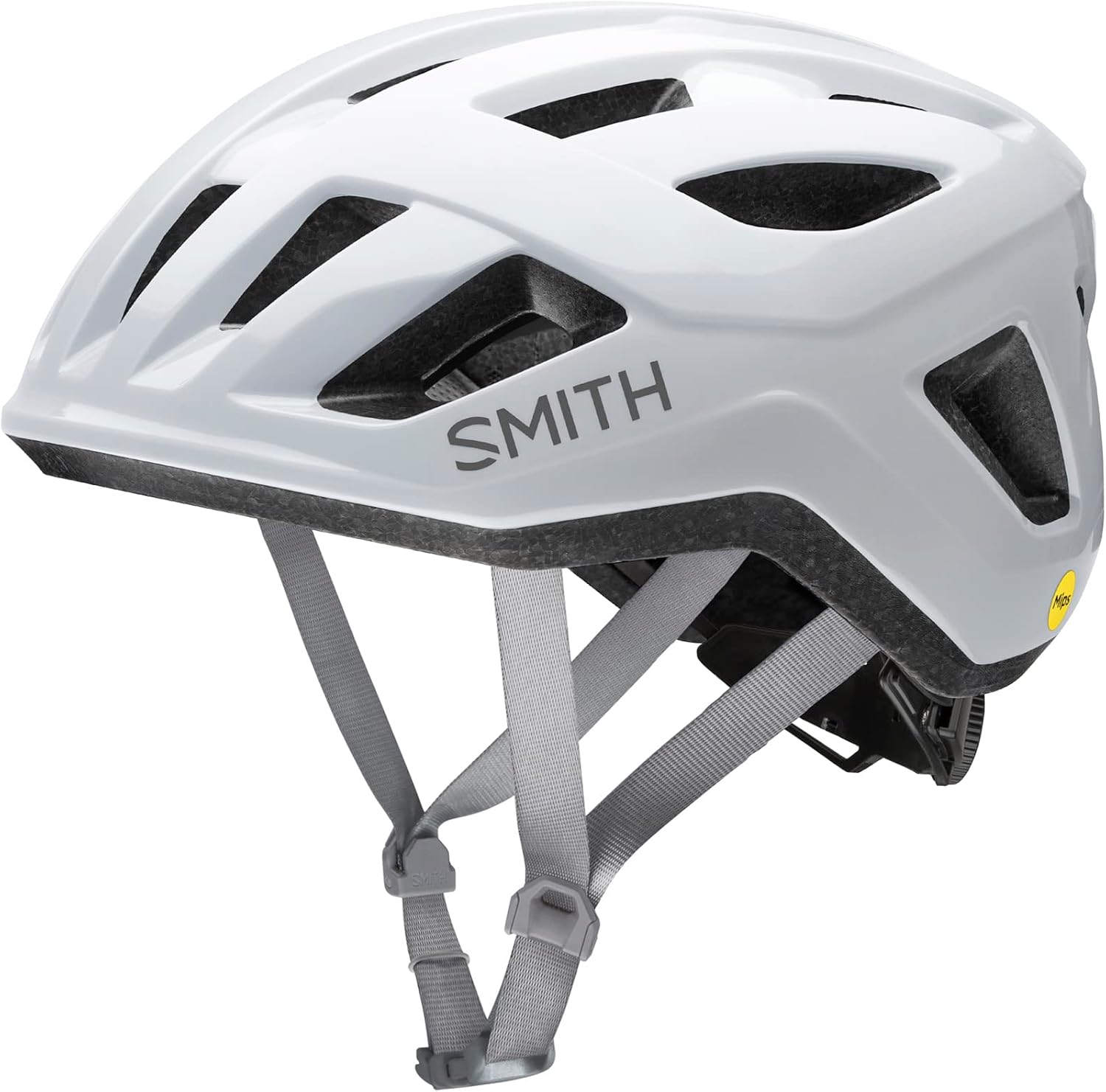
Smith Engage MIPS Mountain Bike Helmet with Koroyd
MIPS plus Koroyd energy absorption -- the MTB upgrade for trail riders who want maximum impact protection.
- MIPS plus Koroyd -- dual impact protection layers for trail riding
- MTB-specific geometry with extended rear head coverage
- 4.7 stars from 994 reviews
Best For / Not For
Best for
- Mountain bikers who take technical trails and experience falls
- Trail riders upgrading from a road or commuter helmet
- Buyers who want the highest protection ceiling in this review
Not for
- Road cyclists -- MTB geometry adds weight and reduces aerodynamics for road use
- Casual commuters who don't ride trails
Key Details
What Koroyd Actually Does
Standard EPS foam (the white material in most helmets) absorbs impact energy by crushing. Koroyd is a co-polymer honeycomb material that replaces or supplements EPS foam with a structure that crushes more completely and uniformly across the entire impact zone. The result is better energy absorption per unit weight -- you get more protection without a heavier helmet. Combined with MIPS for rotational forces, the Smith Engage provides two distinct layers of protection that address the two main injury mechanisms in mountain bike crashes: linear impact force and rotational brain movement.
Pros and Cons
Pros
- MIPS plus Koroyd dual-layer protection
- MTB geometry with extended rear coverage
- 4.7 stars from 994 reviews
- Smith outdoor brand credibility
Cons
- More expensive than the Smith Signal for road use
- MTB geometry is heavier than road helmet equivalents
- Koroyd adds cost that road cyclists don't need
Bottom Line
Consider the Smith Engage MIPS if you ride mountain bike trails where falls are part of the sport. For road and commuter use, the Smith Signal MIPS gives you MIPS protection at lower weight and cost.
Check current price